Stefan Krook
Stefan Krook
Stefan Krook
Speaker · SCLF 2026
Stefan Krook
Stefan Krook
Author of The Laghum Economy. Founder & Chairman, Kivra
Author of The Laghum Economy. Founder & Chairman, Kivra
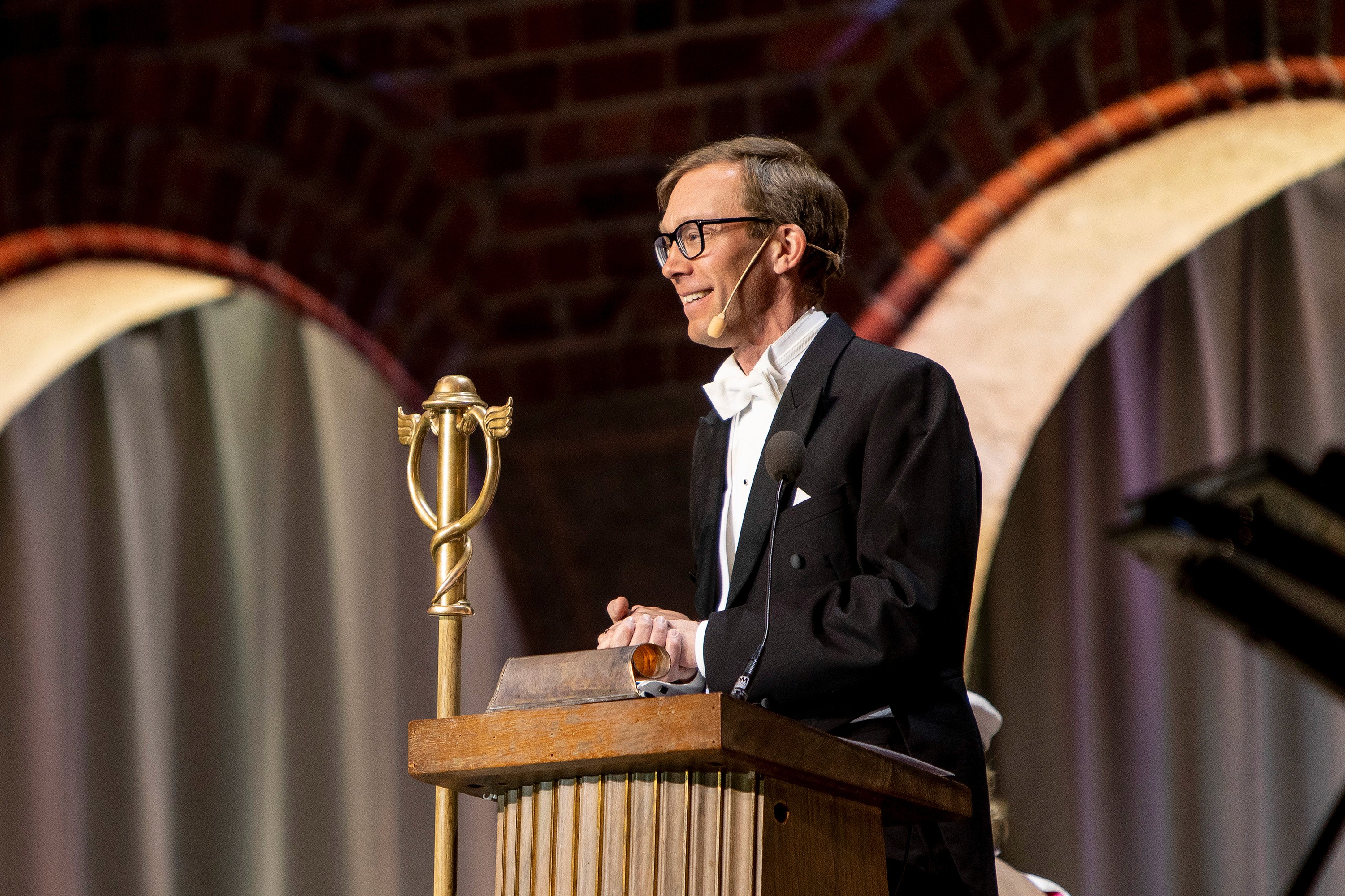
We are delighted to welcome Stefan Krook back to the Stockholm Climate Leadership Forum on 7 October 2026.
We are delighted to welcome Stefan Krook back to the Stockholm Climate Leadership Forum on 7 October 2026.
Stefan Krook is a Swedish entrepreneur, investor and sustainability advocate who has spent more than two decades building companies at the intersection of business and societal value.
Stefan Krook is a Swedish entrepreneur, investor and sustainability advocate who has spent more than two decades building companies at the intersection of business and societal value.
While studying at the Stockholm School of Economics, Stefan founded Glocalnet, a challenger telecommunications company that was later listed on the stock exchange, with Stefan serving as CEO. Today, he is the Stockholm School of Economics’ first Practitioner in Residence and was named its Alumnus of the Year in 2023.
While studying at the Stockholm School of Economics, Stefan founded Glocalnet, a challenger telecommunications company that was later listed on the stock exchange, with Stefan serving as CEO. Today, he is the Stockholm School of Economics’ first Practitioner in Residence and was named its Alumnus of the Year in 2023.
In 2004, Stefan co-founded the GoodCause Foundation, which establishes and operates companies that donate all their profits to charitable causes. Its companies, including GodEl and GodFond, have contributed more than SEK 100 million to organisations working for a better world.
In 2004, Stefan co-founded the GoodCause Foundation, which establishes and operates companies that donate all their profits to charitable causes. Its companies, including GodEl and GodFond, have contributed more than SEK 100 million to organisations working for a better world.
Stefan is also the founder and chairman of Kivra, now an important part of Sweden’s digital infrastructure, and chairman of Flower, which is helping enable the renewable-energy transition through greater flexibility in the electricity grid. He is also CEO of two investment companies jointly owned with Karl-Johan Persson and FAM, the Wallenberg sphere’s wholly owned holding company.
Stefan is also the founder and chairman of Kivra, now an important part of Sweden’s digital infrastructure, and chairman of Flower, which is helping enable the renewable-energy transition through greater flexibility in the electricity grid. He is also CEO of two investment companies jointly owned with Karl-Johan Persson and FAM, the Wallenberg sphere’s wholly owned holding company.
At SCLF 2025, Stefan introduced The Laghum Economy, his vision for an evolution of today’s mixed economies that would enable continued prosperity within planetary boundaries.
At SCLF 2025, Stefan introduced The Laghum Economy, his vision for an evolution of today’s mixed economies that would enable continued prosperity within planetary boundaries.
At SCLF 2026
At SCLF 2026, Stefan will return to the stage to explore:
At SCLF 2026, Stefan will return to the stage to explore:
The Laghum Economy in the Age of AI and Resilient Industrial Capability
The Laghum Economy in the Age of AI and Resilient Industrial Capability
AI can help us optimise energy, materials, production and infrastructure. Yet efficiency alone does not guarantee resilience or sustainability. Without clear principles, technological progress may also accelerate consumption, concentrate power and intensify pressure on natural resources.
AI can help us optimise energy, materials, production and infrastructure. Yet efficiency alone does not guarantee resilience or sustainability. Without clear principles, technological progress may also accelerate consumption, concentrate power and intensify pressure on natural resources.
What should “enough” mean in an age of seemingly limitless technological capability? How can Europe become technologically advanced, industrially resilient and globally competitive while remaining resource-conscious and socially grounded? And how can businesses translate these principles into practical decisions about technology, production, ownership and long-term value creation?
What should “enough” mean in an age of seemingly limitless technological capability? How can Europe become technologically advanced, industrially resilient and globally competitive while remaining resource-conscious and socially grounded? And how can businesses translate these principles into practical decisions about technology, production, ownership and long-term value creation?
Stefan’s return creates an important bridge between SCLF 2025 and SCLF 2026: from rethinking the foundations of our economic model to applying those principles in the age of AI, industrial transformation and the Race for Sovereignty.
Stefan’s return creates an important bridge between SCLF 2025 and SCLF 2026: from rethinking the foundations of our economic model to applying those principles in the age of AI, industrial transformation and the Race for Sovereignty.
The 2026 Forum
On 7 October 2026, business leaders, scientists, investors, policymakers and industrialists gather at a private castle outside Stockholm around the central theme: AI, Climate Adaptation, and the Ripple Effects Reshaping the Global Economy, Infrastructure, and National Security. The Forum is invitation-only.
On 7 October 2026, business leaders, scientists, investors, policymakers and industrialists gather at a private castle outside Stockholm around the central theme: AI, Climate Adaptation, and the Ripple Effects Reshaping the Global Economy, Infrastructure, and National Security. The Forum is invitation-only.